

Extremadura, Spain is a place my friends back home in the US have never heard of. For them, Spain is limited to Madrid, Barcelona, soccer, tapas and sangría-- with the occasional (more cultured) friend mentioning bullfighting or flamenco.
But when I started writing about my Easter week trip to Extremadura, I was really surprised that many of my American friends loved these posts. One friend even told me that he wants to visit Extremadura now (instead of Barcelona!) when he comes to visit. The peaceful Monfrague Park, somber religious processions of Trujillo, and 15th century looking Cáceres must have drawn him in-- or perhaps it was the fact that he could take pictures of himself in Mérida and lie to his friends back home saying he had been in Rome (I don't think they would know the difference!).
When prompted to write something about a "nearcation", a travel vacation destination within a 3 hour drive of Madrid, I knew immediately that I wanted to revisit Extremadura. Spain is awesome; there are many amazing day trips within 4 hours of Madrid, even some great weekend getaways, but for a week or more I'm willing to say that Extremadura is one of your best options.
Wondering what to see in Extremadura?
Full of amazing history, Roman and medieval ruins, monuments, fantastic food, charming towns, a national park with plenty of hiking, biking etc. the Extremadura region is diverse and simply gorgeous.
The three places you simply can't miss in Extremadura are Trujillo, Cáceres and Mérida.
Trujillo
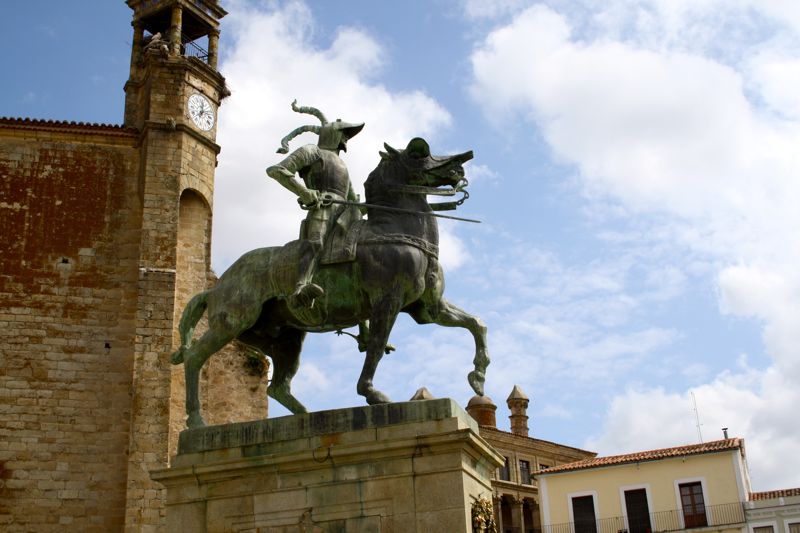
Starting from Madrid you travel about 2,5 hours southwest of the capital to the small town of Trujillo. Charming Trujillo, Spain is full of history and famous for its stunning monuments. Home to a gorgeous Plaza Mayor, the birthplace of explorer Francisco Pizarro, and the annual meeting place for cheese lovers at its yearly Cheese Festival, Trujillo is the perfect place to spend a few days relaxing, walking around, and observing the locals in one of the Plaza Mayor's charming cafés.
Cáceres
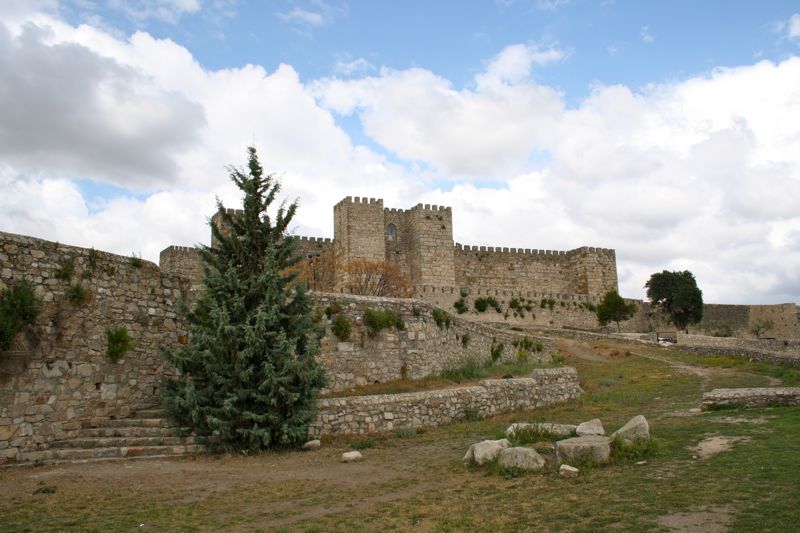
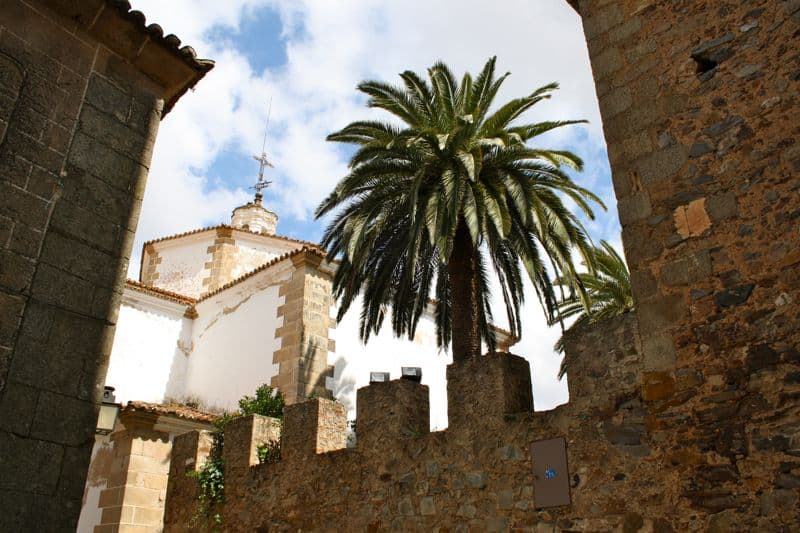
Coming from relaxing Trujillo our next stop is the city of Cáceres. The historic center of Cáceres is spellbinding-- you literally feel like you've been transported back in time to the Medieval Ages. There is a famous monument everywhere you look, so don't even bother with a map. I would recommend losing yourself in the labyrinth of small streets and seeing how many giant storks you can spy (they are some of Cáceres' most famous residents!).
Mérida
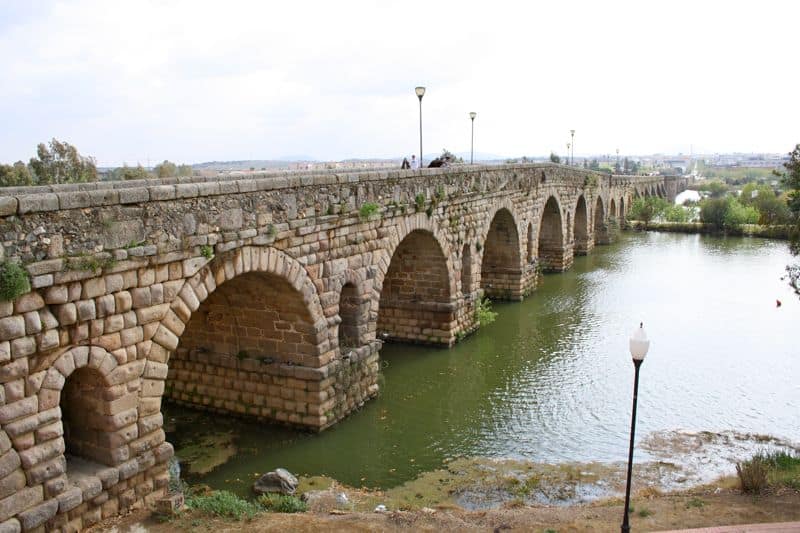
Your last stop is the capital of Extremadura, Mérida. Forget flying to Rome, Merida has Roman ruins galore without all of the pushy tourists. Deemed a UNESCO World Heritage Site, Mérida was once one of the most important cities in the entire Roman empire! Its stunning Puente Romano is the longest existing Roman bridge in the world.
If you live in Madrid and are looking for a nearby vacation destination, why not skip Ryanair this time and stay in Spain checking out Extremadura? Full of history, stunning monuments, great food and friendly people, it will not disappoint and, as a nearby option, is a lot lighter on the wallet!
Where do you live and where would you choose to go on your "nearcation"? Please share!


Raymond Anthony
I love Caceres, Trujillo and Guadalupe. Authentic places to visit.
NellyFrinston
Thanks for the article. I am going to Madrid next month and I'm looking for some great entertainment.
Alex
Extremadura is one of the most beautiful and authentic places in Spain. Lovely people and yummy gastronomy. 2 tips:
- Dont go during the summer, it is very hot,
- Out of the big cities no many people speak English, however everybody are willing to help. You can check http://www.extremadurate.es
Rod Younger
Extremadura is undiscovered Spain and Books4Spain has the following books and maps about Extremadura
Walking in Extremadura by Gisela Radant Wood
http://books4spain.com/book/detail/walking-in-extremadura-1
This book is perfect for all types of walkers and visitors to Extremadura and is currently the only one available.Containing a choice of 27 routes everyone is catered for - those wanting a long challenging walk or a shorter easier stroll, also included are three historical city tours - ideal for those planning to explore Merida, Caceres or Trujillo on foot. Clear maps, useful diagrams with detailed route instructions, including GPS points for those who prefer to use a GPS, make this book easy to walk with and find all key landmarks along the way. The author also thoughtfully provides overview history and other practical information as well as local hints and suggestions. All written by a person who is obviously familiar with Extremadura and a passion for walking in this region combines to successfully let the reader discover Spain’s secret paradise. In addition the size, including a handy cover with integral book mark, and quality printing make it the ideal walking ‘companion’. Review by Rob Innis
Extremadura by Dirk Hilbers
http://books4spain.com/book/detail/extremadura-1
Extremadura has great things for all sorts of travellers and this guidebook will introduce you to the natural splendours of this beautiful region, explain the mechanisms behind them, and direct you to the best places to witness it all for yourself. Detailed descriptions of hiking trails and car routes are conveniently linked to information on everything you want to know about the whats, wheres and whys of Extremadura’s splendid nature.
Monfrague (Extremadura) National Park (Sheet map, folded)
http://books4spain.com/book/detail/monfrague-extremadura-national-park-2008-1
The CNIG (Centro Nacional de Informacion Geografica – Spain’s equivalent to the UK’s Ordnance Survey) walking map of Monfrague National Park in Extremadura Spain. The map has contours at 10m intervals, vivid relief shading, and colouring/symbols to indicate various types of terrain and vegetation. It highlights tourist information such as campsites, sport and leisure facilities, places of interest, etc. The map contain a 1km UTM grid, plus latitude and longitude margin ticks at intervals of 1’. This map includes a 62 page booklet, illustrated with numerous colour photographs, IN SPANISH ONLY with descriptions of recommended hiking routes, lists of campsites and other accommodation, etc. The guide also contains lists of useful addresses, including accommodation, notes on the park’s history, flora and fauna, and safety rules and recommendations. This map also indicates locations for bird watching.
http://books4spain.com/book/detail/montanchez-extremadura-1
http://books4spain.com/book/detail/badajoz-province-extremadura-1
Jane Le Galloudec
There is now a second walking book for the Sierra de gata region of Extremadura by the same author. Even if you don't go in for much hiking or walking these books will give you plenty of ideas of places to go visit, from city to wild swimming in natural pools - Extremadura is a fabulous area, of course I am biased because I live here
Lauren Aloise
Very cool! I'll definitely check this out. Agree that Extremadura is a gem 🙂
amelie88
That's so funny, about a year ago two friends and I did a puente trip to Extremadura (we were also living in Madrid at the time)! We hit up these exact 3 locations. I think we were also trying to figure out how to get to Guadalupe but we didn't have a car. So we had to plan our trip around the bus schedules and the bus routes. We started in Trujillo, spent 2 nights in Merida, and moved on to Caceres the last day. There isn't that much to visit in Extremadura for tourists; in fact we were the only English speaking tourists for miles! But it is an interesting part of Spain to visit.
Jenny
Interesting area. I recently read a book about Spanish history which pointed out that many of the great conquistadors of the New World (Cortez, Pizarro, etc.) came from Extremadura, but the wealth they sent back to Spain isn't reflected in their home towns. It would be interesting to visit.
PS- Yes, there is a Merida in Mexico (on the Yucatan peninsula), and I agree, it was probably given that name by Spaniards who missed their homeland.
Lauren Aloise
That's really interesting. I wonder why or how it didn't make it back there...
eva hamori
We are close to the Spanish border, and have often adventured in your direction.
Thanks for sharing a few destinations off the beaten path.
Eva 🙂
Cassandra
Ever since I saw photos of Mérida I've wanted to plan a trip to Extremadura. Thanks for the other recs, too; hopefully I can spend a (long) weekend exploring this region since Madrid really isn't that far away!
Lissie
I snowed when I was in Merida in April - gawd it was cold! - But there weren't many other tourists!
Amanda @ Not A Ballerina
I always prefer these less well-known places ... and I have to say that just the name "Extremadura" is appealing ... sounds like it's "extremely" good! (And I love Barcelona. Jealous!)
Cat
Glad you decided to do this!!
Ele
I wonder why so many Spanish place names appear in Mexico. I'm sure they also have a place called Merida. Does this name mean something special?
Lauren Aloise
I think it was probably people from Mérida, Spain who ended up naming Mérida in Mexico during its colonial period.
Irene
Many of the Spanish conquerors of the Americas came from Extremadura and called new cities there after their places of origin.
If you are interested in the topic you can have a read at one of my blog posts about 4 Latin American cities called after places in Extremadura. Some interesting facts included. http://www.piggytraveller.com/blog/2014/09/25/latin-american-cities-named-after-places-in-extremadura/
Cheers,
Irene
Lauren Aloise
Thanks Irene! Very interesting. The Americas in general are filled with so many European names!